

NCKU Disaster Prevention Research Center Marks 30th Anniversary, Advancing Interdisciplinary Integration and Global Partnerships for a Resilient Future
Written & Image credit to NCKU DPRC
The Disaster Prevention Research Center (DPRC) at National Cheng Kung University marked its 30th anniversary with a three-day series of events from April 21 to 23, 2026. Under the leadership of Director Professor Hsiao-Wen Wang, the milestone celebration brought together more than 250 participants from academia, government, and disaster management practice in Taiwan and abroad. Through an international signing ceremony, academic symposia, and a commemorative assembly, the events focused on disaster prevention, risk governance, and regional collaboration, highlighting NCKU’s long-standing contributions to disaster science and its expanding global partnerships.

More than 250 experts, scholars, and government officials gather at NCKU to mark the 30th anniversary of the Disaster Prevention Research Center (DPRC) on 23 April, 2026.
Founded in 1996, DPRC was the first university-based center in Taiwan dedicated specifically to disaster prevention. Over the past three decades, it has integrated interdisciplinary expertise across the university to advance disaster-related research, translating scientific findings into policy support and real-world applications. DPRC has since become a key technical and advisory body in national disaster response, land management, and community resilience. The anniversary events mark a significant milestone in its development.
The commemorative events formally commenced on April 22 with the International Collaboration Signing Ceremony between NCKU DPRC, Nippon Koei (Japan), and Hydro Lab (Nepal) alongside the opening of the “The 12th International Workshop on Multimodal Sediment Disasters (MSD12).” The ceremony was attended by NCKU Executive Vice President Yung-Chun Lee, Director of the R&D Center at Nippon Koei Co., Ltd. Masaaki Sakuraba, and Director of DPRC Hsiao-Wen Wang. During the event, DPRC signed memoranda of agreement with Nippon Koei Co., Ltd.’s R&D Center in Japan and Hydro Lab (Hydro Lab Solutions and Services) in Nepal. The agreements signal a deepening of long-term collaboration with the international disaster prevention community, strengthening Taiwan’s engagement with partners across Asia in disaster risk reduction, knowledge exchange, and practical cooperation.
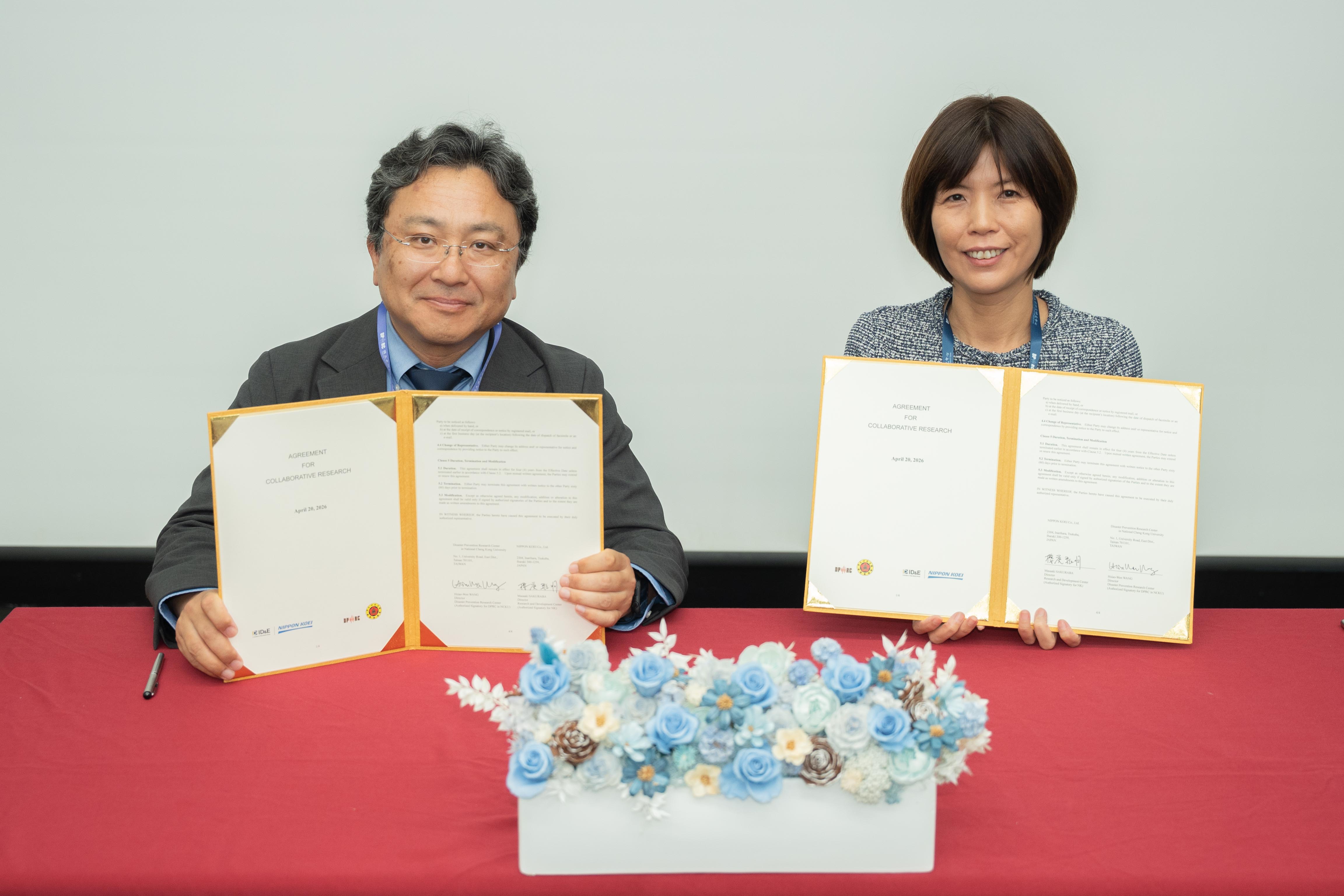
Professor Hsiao-Wen Wang (right), Director of the DPRC, and Masaaki Sakuraba (left), Director of Nippon Koei’s R&D Center, sign a collaborative agreement. The partnership focuses on co-developing monitoring technologies and bridging the gap between research and industrial application.
The MSD12 workshop followed, bringing together experts from Taiwan, Japan, Indonesia, Nepal, Bhutan, and Malaysia to examine the growing frequency and complexity of compound and cascading disasters under extreme climate conditions. Discussions covered hazard monitoring, risk assessment, watershed management, and integrated response frameworks, facilitating the exchange of research and practical experience across Asia and laying a foundation for future regional collaboration.
On April 23, DPRC held its 30th anniversary assembly, alongside three international seminars: the “2026 Taiwan-Japan Joint Forum on Sediment-related Disaster Prevention,” the “9th NCKU-KU Joint Seminar on Natural Hazard Mitigation,” and the continuation of MSD12. These events showcased the center’s long-term research strengths and international visibility in sediment disaster monitoring, natural hazard mitigation, and multi-hazard risk management.
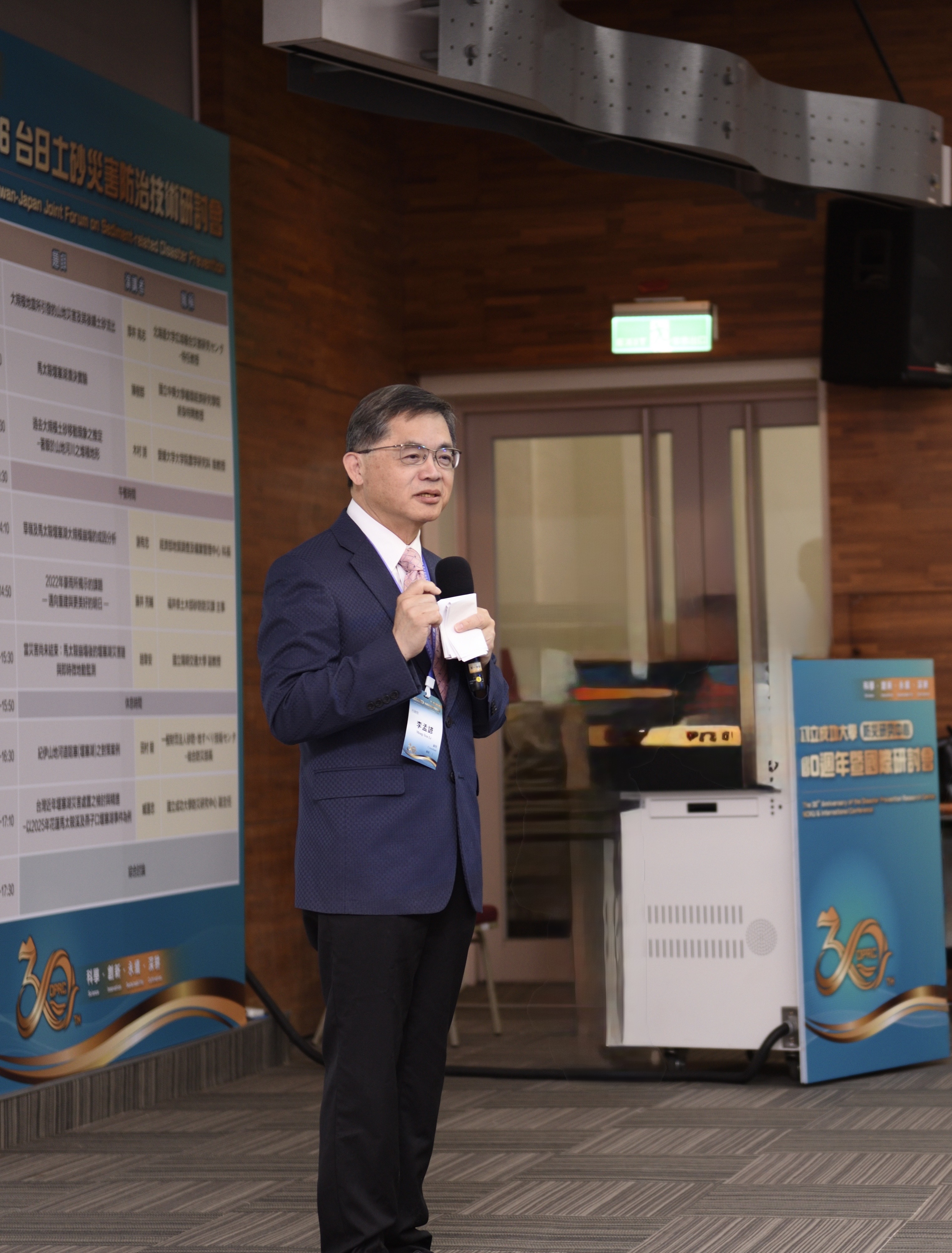
Executive Yuan Advisor Meng-Yen Li delivers a remark at the ceremony, commending the close partnership between the government and the DPRC.
The anniversary assembly was attended by Meng-Yen Li, Advisor to Taiwan’s Executive Yuan; Chin-Lun Wang, Deputy Director-General of Ministry of Agriculture; Yi-Feng Wang, Deputy Director-General of the Water Resources Agency under the Ministry of Economic Affairs; NCKU Executive Vice President Yung-Chun Lee; Vice President for International Affairs Sun-Yuan Hsieh; Dean of the College of Engineering Chyan-Deng Jan; Dean of the College of Social Sciences Chun-Li Tsai; and representatives from international partner institutions. Speakers recognized DPRC’s sustained contributions to scientific research, policy support, and international collaboration in disaster management.
The Taiwan–Japan Joint Forum focused on mountainous hazards under intensifying climate extremes, with a delegation led by Hiroyuki Ohno, President of the Japan Sabo Association, joining experts from both countries to share advances in monitoring systems, early warning technologies, and engineering approaches. The NCKU-KU Joint Seminar built on a long-standing partnership between DPRC at NCKU and the Disaster Prevention Research Institute (DPRI) at Kyoto University, exploring disaster impacts and mitigation strategies in the context of climate change. Meanwhile, MSD12 continued to convene regional experts to discuss integrated approaches to disaster risk across Asia.
Keynote lectures were delivered by Emeritus Professor Chjeng-Lun Shieh, founding director of DPRC, and Hongey Chen, Director of the National Science and Technology Center for Disaster Reduction (NCDR). Their presentations reflected on the evolution of Taiwan’s disaster management system and its future direction, bridging academic research, national policy, and operational practice.
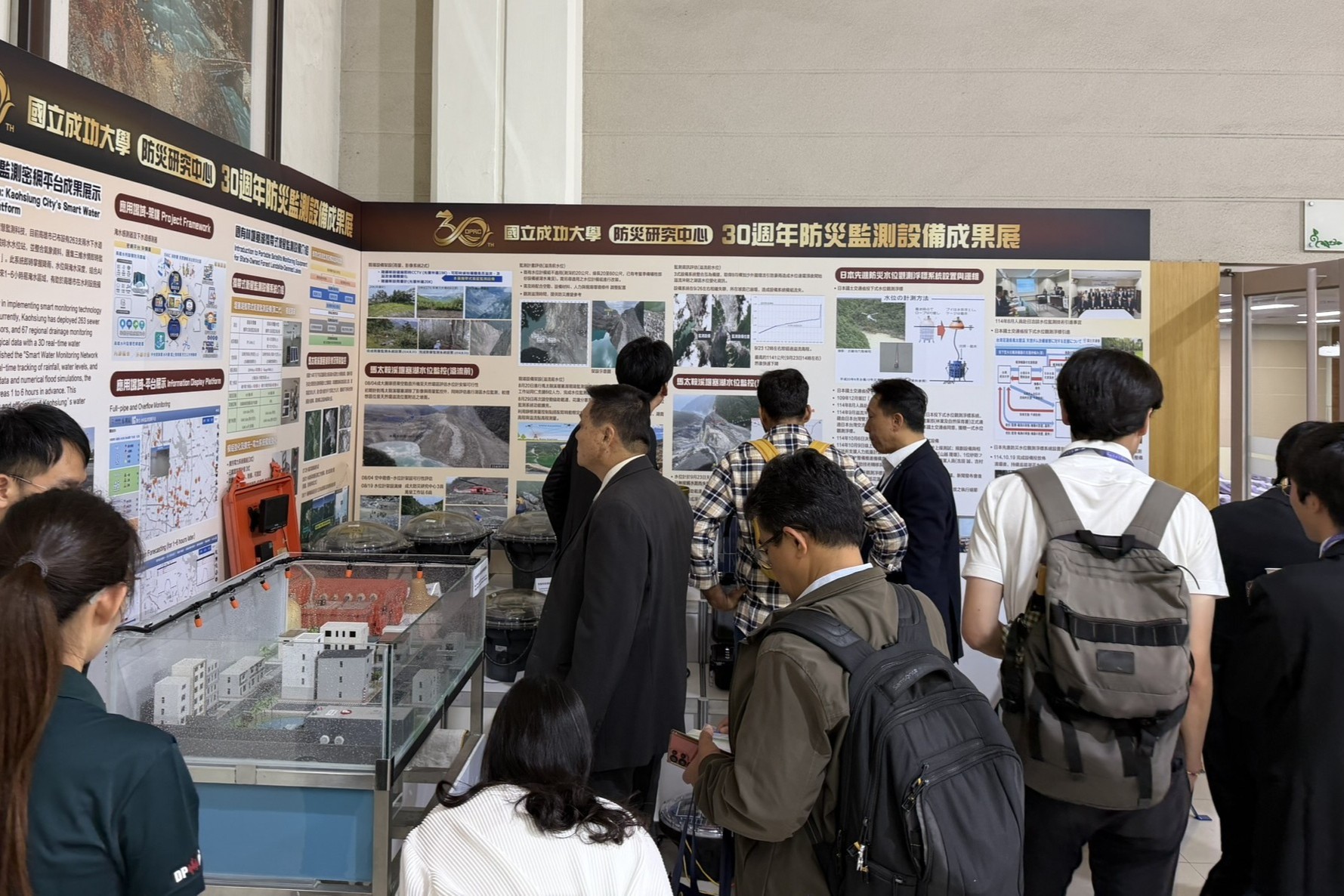
A dedicated exhibition held alongside the anniversary celebrations showcases the disaster monitoring technologies and hardware developed and utilized by the center over the past three decades.
In her remarks, Professor Hsiao-Wen Wang, Director of DPRC, said that 30 years represents a journey of continuous efforts, exploration, innovation, and growth. Reflecting on the center’s development, she noted that its progress—from its early humble and difficult beginnings to its current achievements and influences across multiple fields—has been made possible by the dedication and contributions of past and present colleagues. She expressed her gratitude to former directors for laying the foundation, as well as to researchers, administrative staff, and partners in Taiwan and abroad for their sustained support. Looking ahead, she said she will continue to lead the center with humility, building on its existing strengths to address emerging challenges, advance innovative research, and deepen interdisciplinary and international collaboration, ensuring that DPRC continues to expand its impact over the next three decades.
Over the past 30 years, DPRC has played a critical role in responding to major disasters in Taiwan, including the 1999 Chi-Chi earthquake, Typhoon Morakot in 2009, the 2024 Hualien earthquake, and 2025 landslide dam events. It has contributed to the development of nationwide debris flow early warning systems, supported the incorporation of large-scale landslide risk into policy frameworks, and promoted resilient communities and local disaster preparedness. The center has also extended Taiwan’s expertise in slope hazard management, large-scale landslides, and landslide dam monitoring to countries including Nepal, Bhutan, Indonesia, and Malaysia.
The 30th anniversary events mark both a reflection on past achievements and a turning point for future development, opening a new chapter for disaster research and practice at NCKU.
Provider:
NCKU News Center
Date:
2026-04-27
Click Num:
Share